For an up-to-date publication list, see Google Scholar.
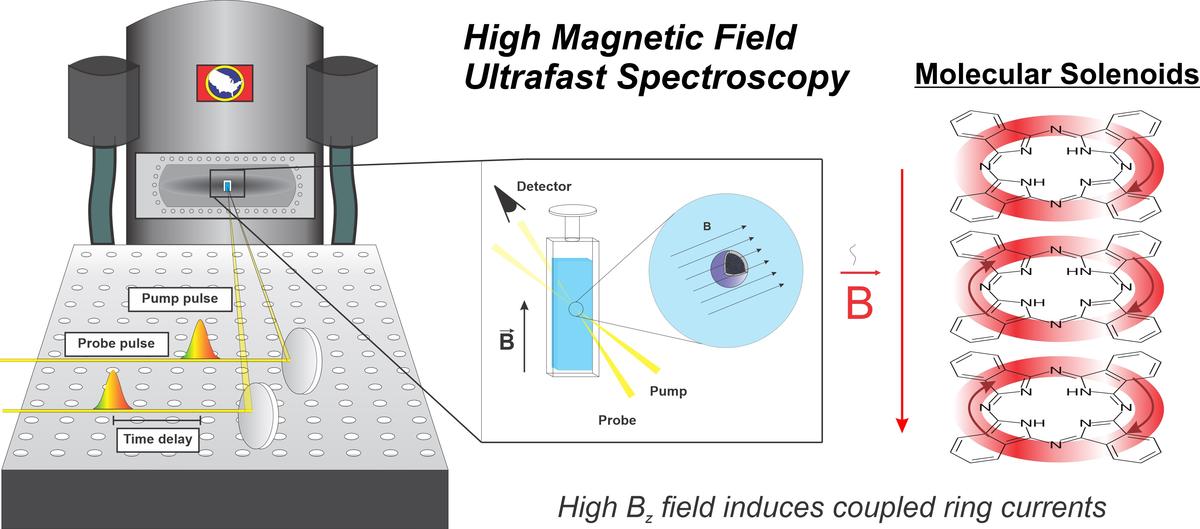
Bryan Kudisch, Margherita Maiuri, Luca Moretti, Maria B. Oviedo, Leon Wang, Daniel G. Oblinsky, Robert K. Prud’homme, Bryan M. Wong, Stephen A. McGill, and Gregory D. Scholes. “ Ring currents modulate optoelectronic properties of aromatic chromophores at 25 T” Proc. Natl. Acad. Sci. U.S.A. In Press (2020).
Applying magnetic fields is a powerful strategy to study the electronic properties of inorganic materials and paramagnetic organic systems due to their straightforward Zeeman interactions. We demonstrate with magnetic fields almost 1 million times stronger than that of Earth (up to 25 T) that we can perturb the optoelectronic properties of model “nonmagnetic”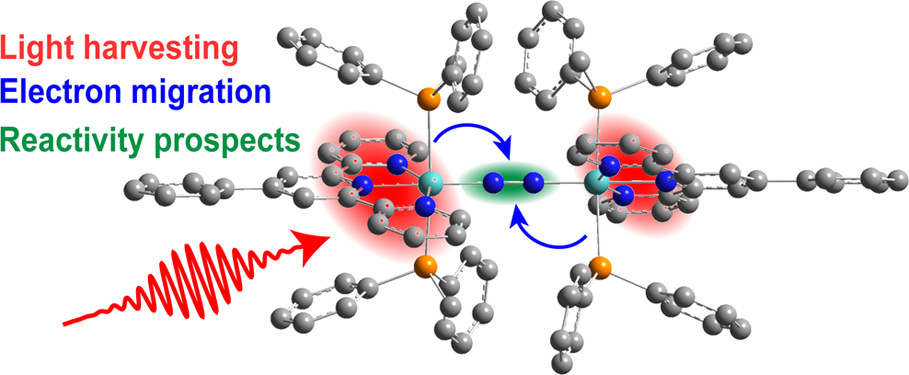
Shahnawaz Rafiq, Máté Bezdek, Marius Koch, Paul Chirik, Gregory D. Scholes “Ultrafast Photophysics of a Dinitrogen Bridged Molybdenum Complex” J. Am. Chem. Soc. 140, 6298-6307(2018). Featured in JACS Spotlights
Among the many metal−dinitrogen complexes synthesized, the end-on bridging (μ2, η1, η1–N2) coordination mode is notoriously unreactive for nitrogen fixation. This is principally due to the large activation energy for ground-state nitrogen−element bond formation and motivates exploration of the photoexcited reactivity of this coordination mode. To provide the foundation for this concept, the photophysics of a dinitrogenbridged molybdenum complex was explored by ultrafast electronic spectroscopies. The complex absorbs light from the UV to near-IR,
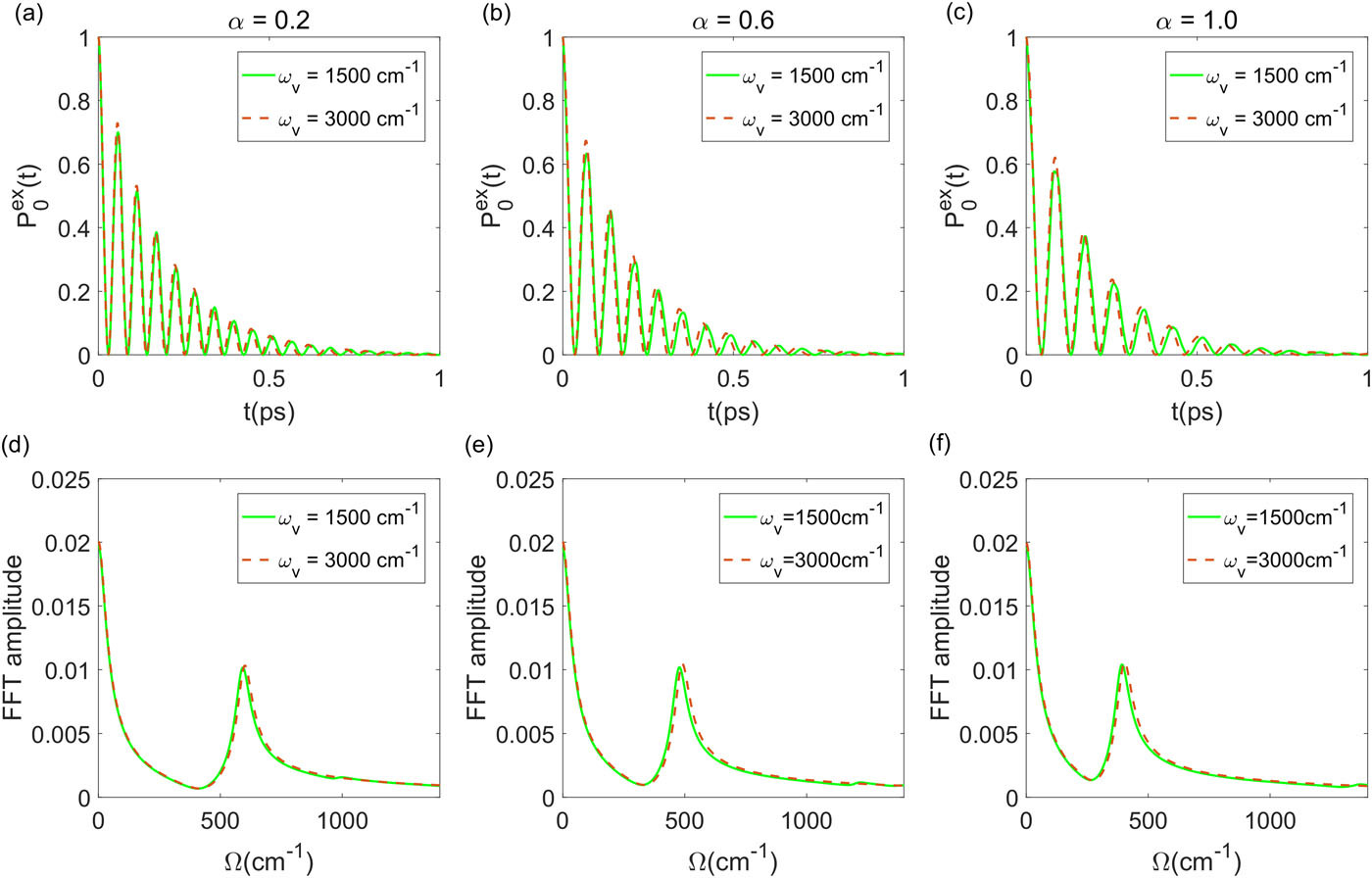
Siwei Wang, Gregory D. Scholes, and Liang-Yan Hsu “Quantum dynamics of a molecular emitter strongly coupled with surface plasmon polaritons: A macroscopic quantum electrodynamics approach” J. Chem. Phys. 151, 014015 (2019).
We study a molecular emitter above a silver surface in the framework of macroscopic quantum electrodynamics and explore the population dynamics including non-Markovian effects. The theory we present is general for molecular fluorescence in the presence of dielectrics with any space-dependent, frequency-dependent, or complex dielectric functions. Furthermore, the proposed theory allows us to calculate the memory kernel of polaritons using computational electrodynamics packages. In the limit of a high vibration frequency,
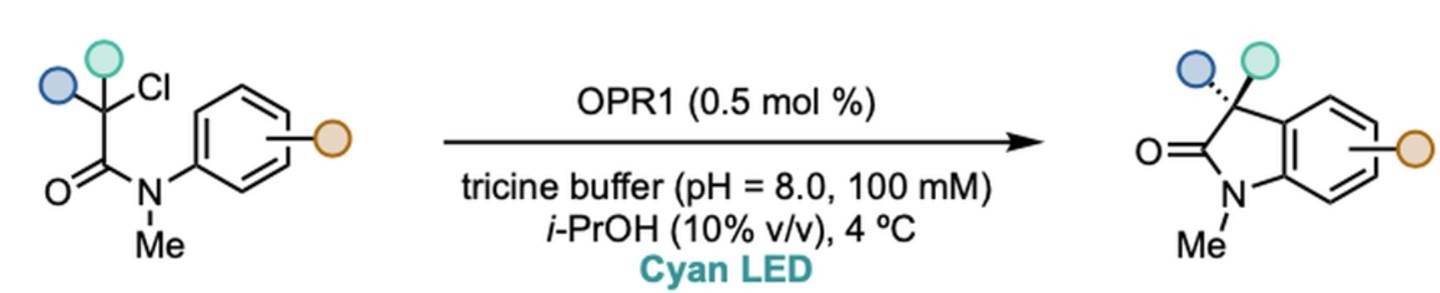
Michael J. Black, Andrew J. Meichan, Kyle F. Biegasiewicz, Bryan Kudisch, Daniel Oblinsky, Gregory D. Scholes & Todd K. Hyster “Turning Flavin to Promote a New Biocatalytic Function: Converting an Oxioreductase into a Cyclase”Nature Chemistry. 12, 71-75 (2020).
Flavin-dependent ‘ene’-reductases (EREDs) are exquisite catalysts for effecting stereoselective reductions. Although these reactions typically proceed through a hydride transfer mechanism, we recently found that EREDs can also catalyse reductive dehalogenations and cyclizations via single electron transfer mechanisms. Here, we demonstrate that these enzymes can catalyse redox-neutral radical cyclizations to produce enantioenriched oxindoles from α-haloamides. This transformation is a C–C bond-forming reaction
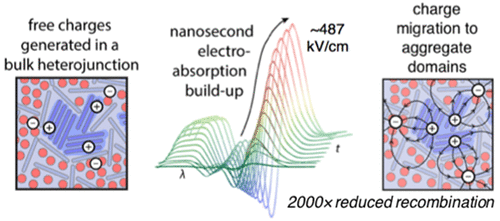
Kyra N. Schwarz, Paul B. Geraghty, Valerie D. Mitchell, Saeed-Uz-Zaman Khan, Bryan Kudisch, Jegadesan Subbiah, Barry P. Rand, Trevor A. Smith, Gregory D. Scholes, David J. Jones, Kenneth P. Ghiggino “Capacitor-like Field Buildup in an Organic Solar Cell Inhibits Charge Recombination” J. Am. Chem. Soc.. 142(5), 2562-2571 (2020).
Organic photovoltaic (OPV) efficiencies continue to rise, raising their prospects for solar energy conversion. However, researchers have long considered how to suppress the loss of free carriers by recombination—poor diffusion and significant Coulombic attraction can cause electrons and holes to encounter each other at interfaces close to where they were photogenerated. Using femtosecond
